
In the evolving realm of workspace design, smart glass technology emerges as a revolutionary tool. This article explores its role in enhancing productivity, energy efficiency, and employee well-being smart glass Malaysia.
We delve into its technical aspects and privacy advantages, substantiated with real-world case studies. For those seeking an innovative approach to workspace freedom and efficiency, this exploration of smart glass technology presents a compelling argument.
Understanding Smart Glass Technology
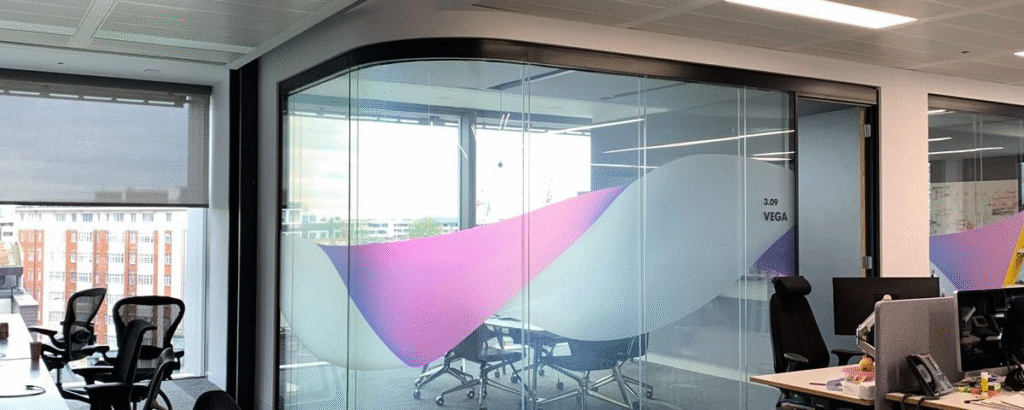
Implementing smart glass technology involves utilizing a type of glass that can alter its light transmission properties based on external stimuli, offering potential to revolutionize workplace environments https://chiefway.com.my/smart-glass/. This innovative technology functions on an electrochromic principle, where a small voltage is applied to a thin layer of material, causing it to transition between transparent and opaque states.
The adaptability of smart glass provides substantial benefits to office spaces. First, it significantly enhances energy efficiency by controlling the amount of light and heat that enters a space, reducing reliance on artificial lighting and air conditioning. Second, it allows for flexible spatial configurations, as the opacity of partitions can be adjusted for privacy or transparency as required.
Smart glass technology represents a significant leap towards autonomous environments, where physical spaces can be dynamically controlled to enhance productivity and well-being. It empowers users with the freedom to shape their surroundings according to their specific needs. As such, understanding this technology is crucial for organizations seeking to foster an environment of innovation and freedom, while also prioritizing sustainability and energy efficiency.
Boosting Energy Efficiency With Smart Glass
In the realm of energy conservation, smart glass emerges as a powerful tool capable of significantly reducing a building’s energy consumption and contributing to a more sustainable work environment. This revolutionary material has the capacity to modulate light and heat transfer, thereby optimizing the use of natural light and reducing dependency on artificial lighting and HVAC systems.
The technical underpinning of smart glass lies in its ability to change its light transmission properties in response to external stimuli such as temperature, light, and electricity. This dynamic functionality can decrease the need for air conditioning during hot seasons and heating during cold seasons, thus lowering energy costs and enhancing workplace productivity through the creation of a more comfortable environment.
Privacy Benefits of Smart Glass
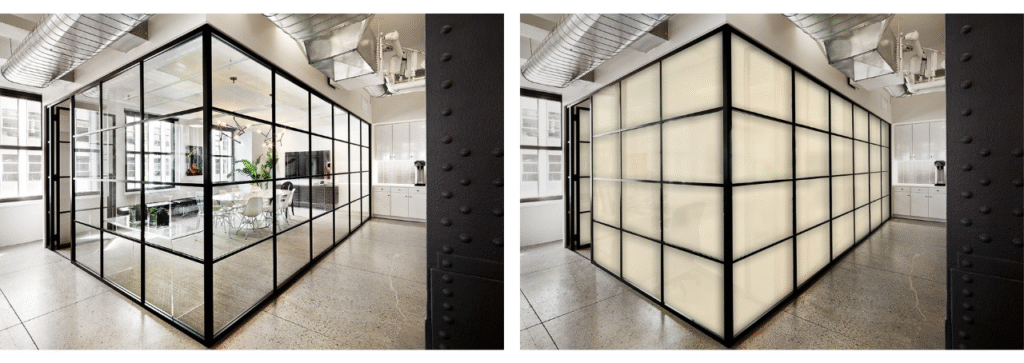
Beyond its significant energy efficiency advantages, smart glass also offers substantial privacy benefits that can greatly contribute to improving workplace productivity. Offices outfitted with smart glass can instantly switch from transparent to opaque, providing an immediate solution for privacy needs.
The potential for distraction in an open office layout is drastically minimized with the use of smart glass. By simply pressing a button, employees can seclude their workspaces, fostering focus and reducing interruptions. This level of control over personal space significantly enhances employee comfort and satisfaction, in turn promoting productivity.
Moreover, smart glass can be an effective tool in safeguarding sensitive information. Companies dealing with confidential data can deploy this technology to shield information from prying eyes, thereby adhering to stringent privacy policies.
In addition, the flexibility offered by smart glass can facilitate a dynamic office environment. Spaces can be easily reconfigured to accommodate private meetings or collaborative sessions, eliminating the need for traditional blinds or curtains.
Enhancing Employee Well-being
A substantial aspect of smart glass technology is its capacity to enhance employee well-being, thereby contributing to overall workplace productivity. It achieves this through its ability to modulate the amount and quality of natural light entering the workspace. Exposure to natural light is linked to improved mood, focus, and sleep quality, all elements that directly influence employee performance and satisfaction.
Smart glass can also mitigate issues associated with conventional window systems, such as thermal discomfort and glare, providing a more comfortable and visually friendly environment. By allowing employees to control their individual light environment, smart glass technology not only optimizes physical comfort but also fosters a sense of autonomy, a critical factor in job satisfaction and motivation.
Moreover, the dynamic privacy options offered by smart glass enable employees to balance their need for privacy with their desire for openness and collaboration. This flexibility enhances psychological comfort and reduces stress, further contributing to well-being and productivity.
Case Studies: Smart Glass in Action
Several real-world examples illustrate the effectiveness of smart glass technology in enhancing workplace productivity and employee well-being.
For instance, the multinational company Saint-Gobain implemented smart glass in their North American headquarters, resulting in a 40% reduction in energy usage. The dynamic glass system adjusted to external lighting conditions, thereby reducing glare and optimizing natural light, which improved employee comfort and productivity.
Another case study involves the San Francisco International Airport, which installed smart glass in their control tower. This helped to mitigate sun glare, a significant factor affecting air traffic controllers’ efficiency. The smart glass technology offered a solution that was both energy-efficient and conducive to a better working environment.
Lastly, the Edge in Amsterdam, dubbed the ‘smartest building in the world’, employs smart glass technology extensively. The building’s advanced infrastructure harnesses the power of natural light while minimizing energy consumption, improving overall worker satisfaction and productivity.
These case studies unequivocally demonstrate the practical implications of smart glass. The technology not only offers an energy-efficient solution but also fosters a conducive work environment, thereby enhancing productivity and employee well-being. This makes smart glass a viable and value-adding investment for modern workplaces.
Conclusion
In conclusion, smart glass technology offers multifaceted benefits in the workplace. From enhancing energy efficiency to bolstering employee well-being, its advantages are significant. Its ability to provide instant privacy and adjust to environmental conditions makes it a transformative tool in modern offices.
As demonstrated in various case studies, the implementation of smart glass technology can significantly improve productivity. This marks it as an essential element in the future of sustainable and efficient workspace design.
